Partial rebuild
When only the upper section of the chimney has failed, we take down and rebuild that portion, keeping the sound masonry below. This restores the most exposed and most damaged part of the stack.
Chimney masonry rebuild and installation in Chandler, AZ. Full and partial rebuilds for leaning, crumbling, or storm-damaged chimneys.
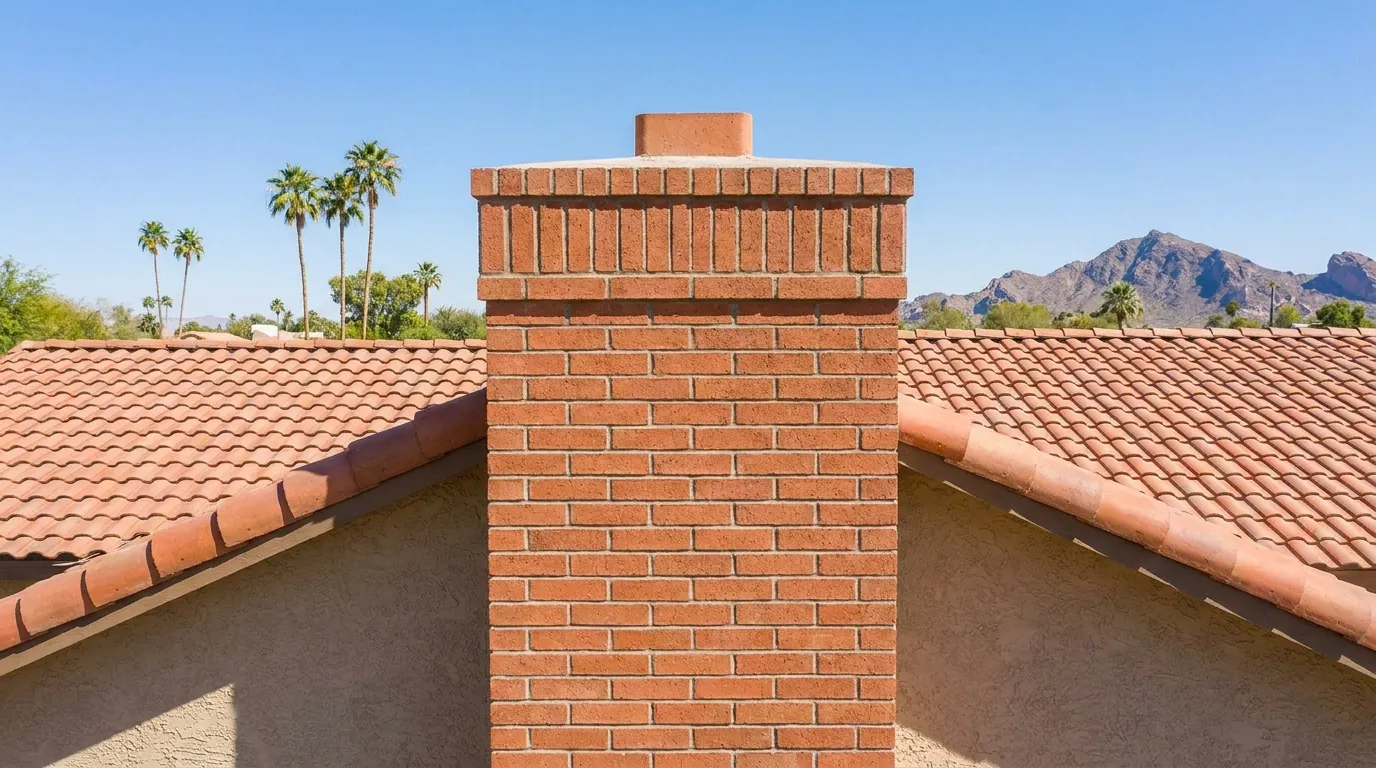
Some chimneys have gone too far for a patch. When the mortar has failed through multiple courses, when brick is crumbling faster than it can be replaced, when the stack is leaning or the top section is loose, a repair only buys a little time. In those cases a partial or full rebuild is the honest answer — you take the failed masonry down to sound material and build back up correctly.
In Chandler, chimneys reach this point through years of the same cycle: intense heat, dry mortar, and monsoon rain forcing water into every gap. The freeze-thaw swings are milder here than in colder climates, but the sheer heat load and sudden heavy rain still degrade masonry over time, especially on chimneys that were never sealed or maintained. Once water has been getting in for years, the damage is often deeper than the surface suggests.
A rebuild is the point where you decide whether to keep patching or invest in a chimney that will last. If you are not sure yours needs a full rebuild, start with our chimney masonry repair service page to understand the smaller repairs, or our repair page to see where patching ends and rebuilding begins. We will always tell you honestly when a repair is enough and when it is not.
A rebuild is scoped to the damage — sometimes just the top few courses, sometimes the whole stack.
When only the upper section of the chimney has failed, we take down and rebuild that portion, keeping the sound masonry below. This restores the most exposed and most damaged part of the stack.
When damage runs the height of the chimney or the structure is leaning, the stack is rebuilt from a sound base upward, laid plumb and true with fresh brick and mortar.
A rebuild is finished with a properly sloped crown and a new cap. These are the parts that shed rain and keep water and debris out of the flue, protecting the new masonry from day one.
New flashing seals the rebuilt chimney to the roof, and a breathable sealer helps the fresh masonry resist Chandler's monsoon rain without trapping moisture inside the brick.
Rebuilding is careful work — the goal is a chimney that stands straight, sheds water, and matches your home.
We determine how far the damage extends and whether a partial or full rebuild is needed, so you are not paying to replace sound masonry.
Failed brick and mortar are taken down to a sound base, with care to protect the roof and surrounding structure.
New brick is laid to match the existing coursing, with mortar tooled to shed water. The stack is built plumb and true.
We finish with a properly sloped crown, a new cap, and resealed flashing — the three elements that keep the new masonry protected from Chandler's rain.
We confirm everything is watertight and structurally sound, then clear the roof and grounds of debris.
If your chimney is leaning, crumbling, or leaking despite past repairs, reach out for an assessment. We will tell you whether a repair or a rebuild is the right call.
Serving Chandler, Gilbert, Tempe, Mesa, and the wider East Valley.
That depends on how deep and widespread the damage is. Isolated cracks and open joints usually call for a repair, while a leaning stack or masonry failing through many courses often needs a rebuild. We assess the whole structure before recommending one over the other.
Cost is driven by how much of the chimney is being rebuilt, its height, roof access, and the brick used to match your home. A partial rebuild of the top section costs far less than a full-height rebuild. We scope the work and explain the pricing before starting.
We work to match the brick color, size, and mortar joint of your home as closely as possible. On older homes an exact match can be difficult, but a rebuilt stack should read as part of the house, not a patch.
A partial rebuild often takes a couple of days; a full rebuild can take longer, and masonry needs dry weather to cure. Monsoon rain can add time to the schedule, and we plan around it rather than rush curing masonry.