Chimney Crown and Cap Replacement
Chimney crown repair and cap replacement in Chandler — sealing the top of the stack where cracks and rust let monsoon water in.
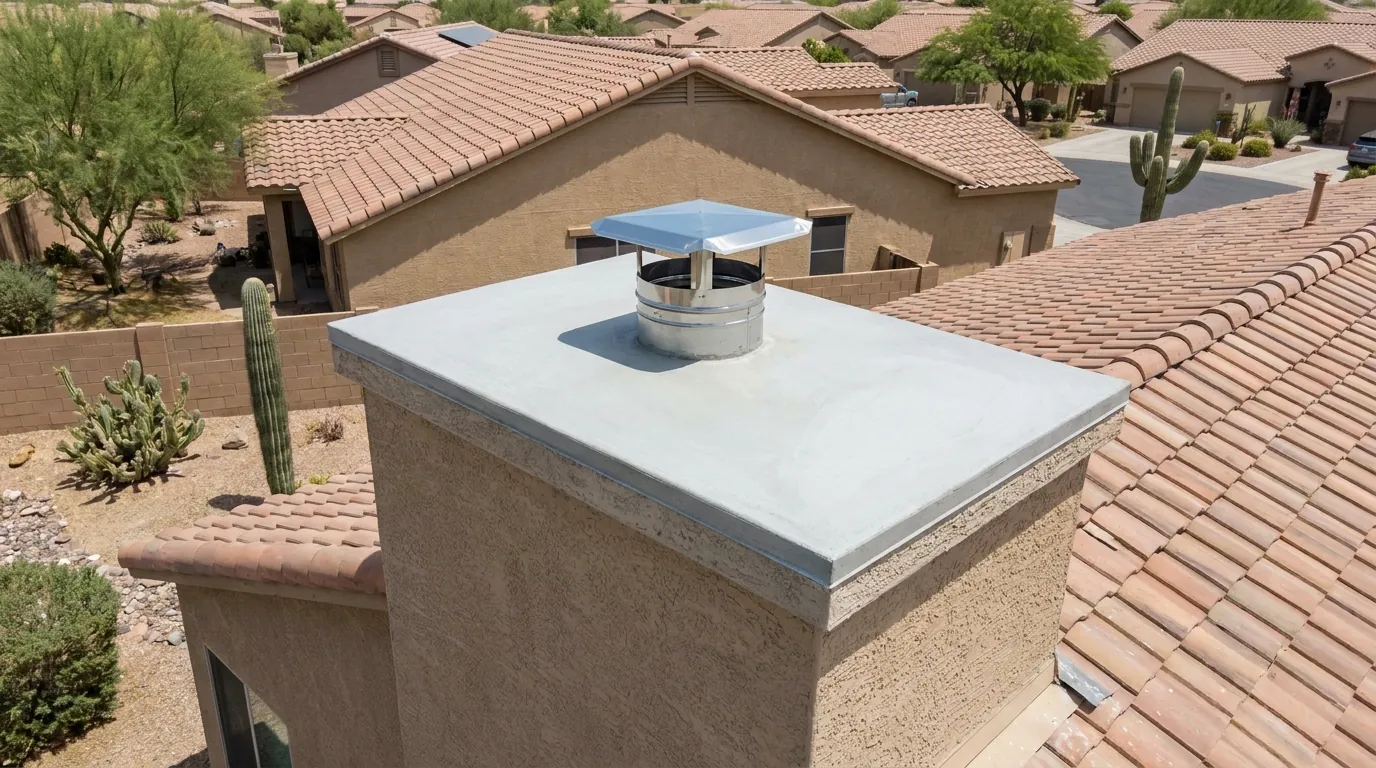
The most important few inches of your chimney
The crown is the sloped masonry slab at the very top of the stack, and the cap is the metal cover over the flue opening. Together they are the chimney's roof: the crown throws rainwater out and away from the brick, and the cap keeps rain, birds, and debris out of the flue. When either fails, water pours into the top of the chimney and works its way down through the masonry — which is why so many chimney leaks trace straight back to a cracked crown or a rusted-out cap.
The signs are visible from the ground with a look, or clearer up close: cracks running across the crown, chunks missing from its edge, rust streaks bleeding down the brick from a galvanized cap, or a cap that is bent, loose, or gone entirely. A cracked crown is the single most common water entry point on a masonry chimney, and it feeds problems below — spalled brick, failing joints, and the interior stains people usually notice first. Fixing the crown and cap early is far cheaper than the tuckpointing and brick repointing or rebuild work that follows years of top-down water damage.
If the flue liner is also deteriorating — common on older clay-lined chimneys here — the crown work is a natural time to address it, which is why this often pairs with stainless steel flue relining.
What crown and cap replacement involves
The goal is a crown that overhangs and sheds, and a cap sized to the flue.
-
Assess the existing crown
We check whether the crown can be sealed and patched or needs to come off. Thin mortar washes and badly cracked crowns are removed rather than patched over.
-
Form and pour a new crown
A proper crown is poured with a slope and an overhang, or drip edge, that throws water clear of the brick below rather than letting it run down the joints.
-
Set the cap
A stainless cap is fitted to the flue size. Stainless holds up to Chandler's sun and mineral-heavy air far better than galvanized, which rusts and streaks the brick.
-
Seal and check the top
We seal the crown-to-flue joint and confirm the whole top assembly sheds water outward, and address the liner if it is failing too.
Why crowns fail fast in Chandler
Two local conditions are hard on crowns. First, the heat-and-cool cycling: a crown bakes all afternoon and cools sharply at night, and any hairline crack widens a little each cycle. Second, monsoon downpours arrive in short, heavy bursts — exactly the volume of water a cracked, flat, or worn crown cannot shed fast enough, so it soaks in instead. A thin, poorly sloped original crown rarely survives many desert years, which is why we pour a replacement with real slope and a proper overhang.
Caps have their own local enemy: galvanized steel rusts quickly in mineral-heavy air and stains the brick below, so we set stainless. When we replace a crown and cap we also confirm the roofline is sealed, because top-down and roof-joint leaks often show up together — see chimney flashing and leak repair for that side of the work.
Seal the top before the next monsoon
A cracked crown or rusted cap only gets worse with each storm. Arrange an assessment to protect the masonry below.
Serving Chandler and the East Valley.
Frequently asked questions
Can a cracked crown be sealed instead of replaced?
Minor hairline cracks can sometimes be sealed with a flexible crown coating. Badly cracked, spalling, or improperly sloped crowns should be removed and re-poured, since sealing over serious damage only delays the leak.
Why choose a stainless cap over galvanized?
Galvanized caps rust in Chandler's dry, mineral-heavy air and streak rust down the brick within a few years. Stainless steel resists corrosion far longer and holds up to the intense sun, making it the better long-term choice here.
Will a new crown and cap stop my chimney leak?
Since the crown and cap are the most common top-down leak sources, replacing them stops many chimney leaks. If water is also entering at the flashing or through open joints, those areas need attention for a complete fix.
How long does crown and cap replacement take?
A crown pour needs time to cure, so plan for the work plus cure time before the top is fully weatherproof. The cap itself is set quickly once the crown is ready.