Firebox and Hearth Masonry Restoration
Restoring cracked firebrick, failed refractory joints, and damaged hearths in Chandler fireplaces so the firebox is solid and safe.
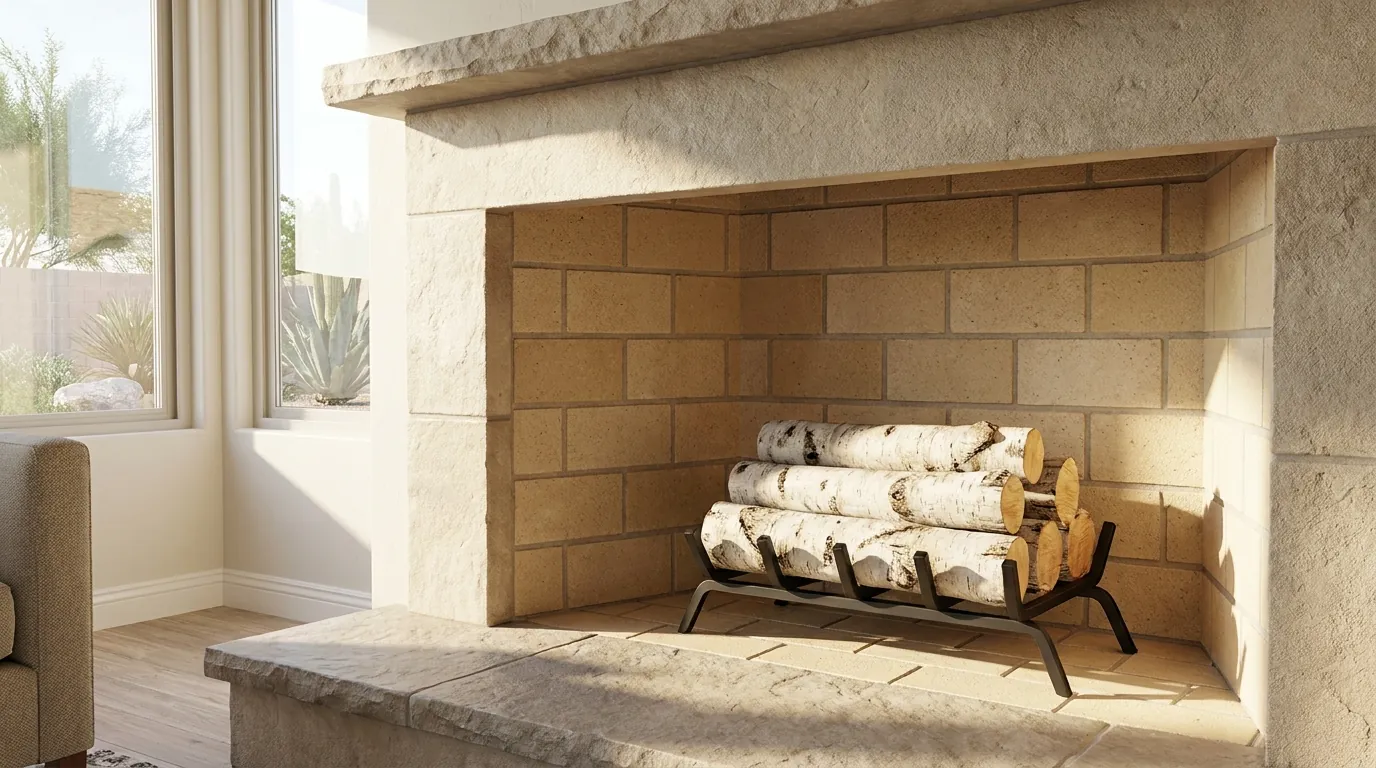
The part of the chimney inside your living room
The firebox is the chamber where the fire actually burns, and the hearth is the floor in front of it. Both are built from firebrick and refractory mortar rated to withstand direct flame — far more demanding conditions than the rest of the chimney faces. Over years of use, that firebrick cracks and spalls, the joints between them open up, and the hearth can loosen. Restoration replaces failed firebrick and repacks the joints with heat-rated materials so the chamber holds its shape and keeps heat where it belongs.
The warning signs are visible when you look inside: cracked or crumbling firebrick, gaps where the mortar has fallen out of the joints, missing chunks at the back or corners, and loose or cracked hearth brick. These are not cosmetic — open joints and cracked brick in the firebox let heat reach places it should not, which is why the firebox is a common focus of a fireplace inspection. Ordinary masonry mortar cannot be used here; it fails quickly under direct flame, so the repair depends on proper refractory materials.
Firebox restoration is often part of a broader chimney tune-up. If the flue above it is also compromised, stainless steel flue relining may belong in the same visit, and if water has been reaching the firebox from above, that usually points to a chimney crown and cap replacement as well.
What firebox and hearth restoration involves
Restoration uses refractory materials rated for direct-flame heat, not standard masonry mortar.
-
Assess the firebox and hearth
We inspect the firebrick, the joints, and the hearth for cracks, missing material, and gaps, and determine how much needs to be replaced versus repointed.
-
Replace damaged firebrick
Cracked or spalled firebrick is removed and replaced with new firebrick matched to the opening, so the chamber holds its shape and heat barrier.
-
Repoint with refractory mortar
Open joints are cleaned and repacked with heat-resistant refractory mortar rated for firebox temperatures — ordinary mortar would fail quickly under direct flame.
-
Restore the hearth
Cracked or loose hearth brick is reset and the joints refreshed so the floor in front of the firebox is solid and safe to use.
Local factors and why materials matter
Many Chandler fireplaces see light seasonal use — a handful of cool desert nights each year — which can mask firebox wear because the damage accumulates slowly and out of sight. When a firebox has cracked joints and spalled brick, though, those problems do not wait for heavy use; a few hard fires are enough to open them further. That is why an honest look inside the firebox is worth doing even on a fireplace that only runs occasionally.
Water intrusion from above can also punish a firebox. If a cracked crown or failed flashing has been letting monsoon water down the chimney, it soaks into the firebox and hearth and accelerates the decay — so restoring the firebox without fixing the source above just resets the clock. When that is the case, we look at the whole chimney, from the chimney flashing and leak repair at the roofline down to the hearth, so the restoration actually lasts.
Have your firebox looked over
Cracked firebrick and open joints in the firebox are a safety issue. Arrange an assessment before the next burning season.
Serving Chandler and the East Valley.
Frequently asked questions
Why can't regular mortar be used in the firebox?
The firebox is exposed to direct flame and very high temperatures, which quickly break down ordinary masonry mortar. Refractory mortar and firebrick are made to withstand that heat, so they are the only correct materials for firebox joints and brick.
How do I know if my firebox needs restoration?
Look for cracked or crumbling firebrick, joints where the mortar has fallen out, missing chunks at the back or corners, and loose hearth brick. Any of these means the firebox is no longer sound and should be assessed.
Does light fireplace use mean I can skip firebox repairs?
No. Even a few hard fires can widen existing cracks and open joints in a damaged firebox. Because desert fireplaces are used seasonally, wear often builds unnoticed, so periodic inspection still matters.
Can water damage affect the firebox?
Yes. If a cracked crown or failed flashing lets rain into the chimney, water reaches the firebox and hearth and speeds up their decay. Fixing the water source above is part of making a firebox restoration last.