Chimney Flashing and Leak Repair
Chimney flashing repair and leak tracing in Chandler — finding the real water entry point and sealing it against monsoon downpours.
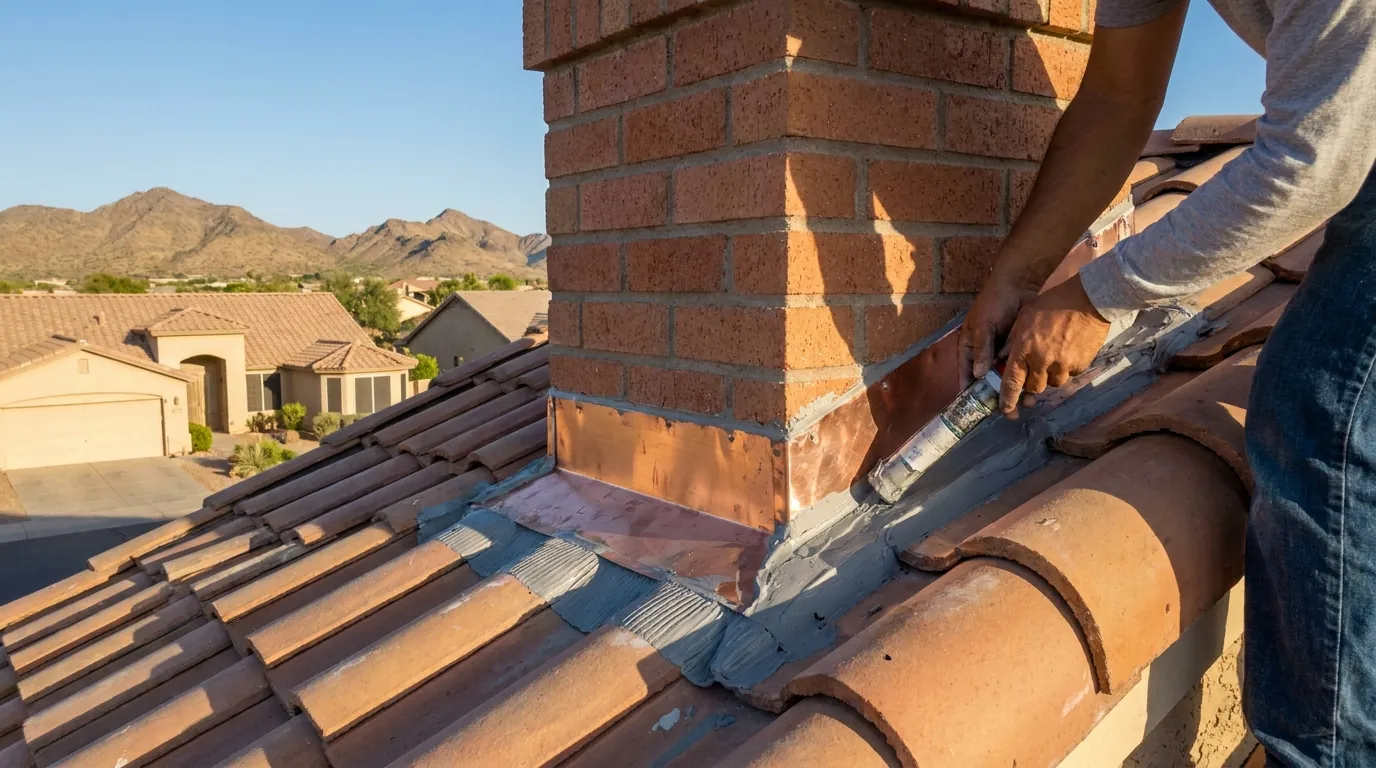
Why chimneys leak here in the desert
Flashing is the metal that seals the joint where the chimney passes through the roof. It is one of the most common places a chimney leaks, because that joint moves, bakes in the sun, and takes the full force of wind-driven monsoon rain. When flashing loosens, rusts, or was sealed with the wrong caulk, water slips behind it and runs into the attic and down the walls — usually showing up first as a brown ceiling stain near the chimney after a storm.
People often ask why the chimney leaks in a hard rain but stays dry the rest of the year: it is because Chandler's leaks are almost always wind-driven-rain leaks, not slow-drip leaks. A short, intense monsoon burst drives water at the flashing and mortar joints from the side, finding gaps that a gentle rain never would. Diagnosing that correctly matters, because the stain on the ceiling is rarely directly below the actual entry point.
Flashing is the usual culprit, but not the only one. A cracked crown or rusted cap can send water down from the top, and eroded joints can wick it through the brick, so a good leak repair checks all of them. Related work includes chimney crown and cap replacement and tuckpointing and brick repointing when the water is finding more than one path.
How flashing and leak repair works
Finding the true entry point matters as much as the sealing.
-
Locate the leak
We trace the water path from the interior stain back to the entry point. Flashing is the usual culprit, but we also check the crown, cap, and mortar joints so we seal the real source, not just the closest joint.
-
Repair or replace the flashing
Loose or rusted flashing is re-secured or replaced. Where the metal meets the brick, we cut a clean reglet where needed and set the counter-flashing into the mortar joint so water cannot slip behind it.
-
Seal with the right materials
We seal the joints with materials rated for the intense UV and heat here, since standard caulk bakes out and cracks within a season or two on a Chandler roof.
-
Verify and check related points
We confirm the repair holds and check whether the crown or joints are also letting water in, so nothing is missed.
What the local climate does to flashing
Sun is the quiet destroyer of flashing seals in Chandler. Intense year-round UV and roof-surface temperatures cook ordinary sealant until it hardens, shrinks, and cracks, opening the exact gap the next monsoon exploits. That is why the material choice matters so much here — a seal that lasts in a mild climate can fail in a single desert summer. We use materials rated for high UV and heat, and we set counter-flashing into the mortar rather than relying on surface caulk alone.
Because desert leaks are storm-driven, testing under real conditions or carefully tracing the path is part of doing this right. If the leak turns out to be coming from a failing liner or a rotted top assembly rather than the roof joint, we can fold in stainless steel flue relining so you are not chasing the same stain twice.
Stop the leak at its source
A ceiling stain near the chimney after a storm is your cue. Arrange an assessment to trace and seal the real entry point.
Serving Chandler, Gilbert, Tempe, Mesa, Queen Creek and nearby areas.
Frequently asked questions
Why does my chimney only leak during heavy rain?
Chandler leaks are usually wind-driven-rain leaks. A short, intense monsoon burst pushes water sideways into flashing gaps and mortar joints that a light rain never reaches, so the leak appears only in a hard storm.
Is flashing always the cause of a chimney leak?
Flashing is the most common cause, but not the only one. Cracked crowns, rusted caps, and eroded mortar joints also let water in, which is why a proper leak repair checks all of them before sealing.
Can't I just add more caulk to the flashing?
Surface caulk on flashing bakes out fast in the desert sun and buys only a season or two. A lasting repair re-secures or replaces the flashing and sets counter-flashing into the mortar joint so water cannot get behind it.
How do you find where the water is really coming in?
We trace the path from the interior stain back up, since the entry point is rarely directly above the stain. Checking the flashing, crown, cap, and joints together lets us seal the true source rather than guessing.