Stainless Steel Flue Relining
Relining older clay or cracked flues with a continuous stainless liner in Chandler for safer draft and a watertight chimney top.
When the inside of the chimney is the problem
The flue is the passage inside the chimney that carries smoke and combustion gases out. Older chimneys in and around Chandler are often lined with clay tile, and after decades of heating cycles those tiles crack, shift, or crumble. Some older stacks have no proper liner at all. A damaged or missing liner lets heat and gases reach the surrounding masonry and can allow moisture and creosote to build in the wrong places — a safety and performance issue that a stainless liner solves by giving the flue a continuous, sealed, correctly sized passage.
Signs that point toward relining include chunks of clay tile found at the base of the chimney or in the firebox, poor draft or smoke spilling back into the room, and a chimney inspection that finds cracked or gapped tile. Relining is also frequently recommended when the appliance or fuel type has changed, because the old flue may be the wrong size for a proper draft. Because relining opens up the top of the chimney, it is commonly done alongside chimney crown and cap replacement so the whole top assembly is renewed at once.
If your chimney also has masonry damage above the roof, relining is often coordinated with a chimney rebuild above the roofline so the flue and the brick are handled together rather than in two separate disruptions.
How relining is done
The right liner size and a proper seal top and bottom are what make relining work.
-
Inspect and size the flue
We inspect the existing flue, often with a camera, to confirm the damage and measure for the correct liner diameter — an undersized or oversized liner drafts poorly.
-
Remove debris and obstructions
Broken tile, creosote buildup, and debris are cleared so the new liner can run straight down the flue without catching.
-
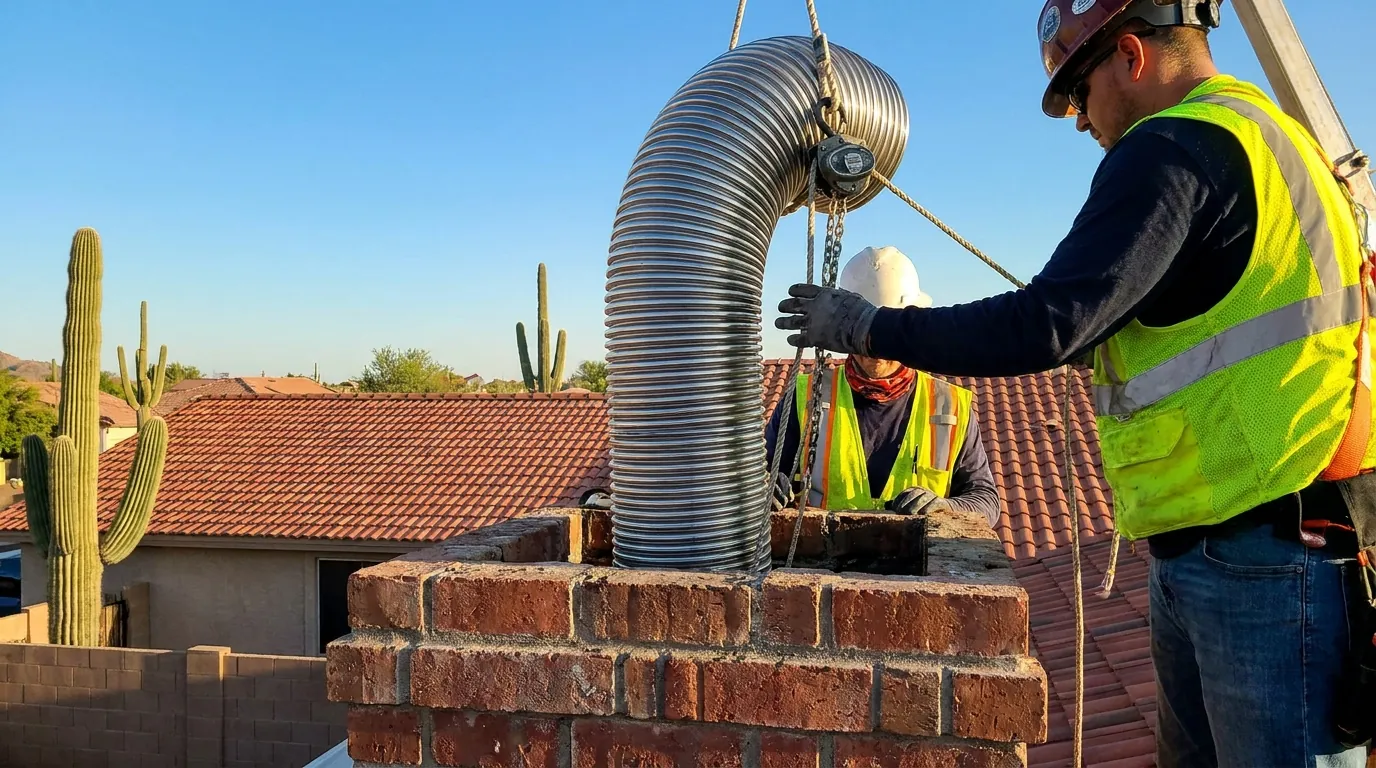
Install the stainless liner
A continuous stainless liner is lowered through the flue and connected at the appliance or firebox. For open fireplaces, insulation around the liner improves draft and keeps the surrounding masonry cooler.
-
Seal and cap
The liner is sealed at the top and finished with a cap so the whole top assembly is watertight.
Local reasons relining comes up in Chandler
Many East Valley chimneys were built with clay tile liners that have gone through decades of the region's sharp heat-and-cool cycling. Those cycles are hard on rigid clay tile — it cracks and separates at the joints over time, opening gaps that a stainless liner does not have because it runs continuously from top to bottom. Stainless also stands up to the dry, mineral-heavy air far better than the metal used in some older repairs.
Relining and water protection go hand in hand. A new liner sealed at the top, combined with a sound crown and cap, keeps rain out of the flue during monsoon storms. If your inspection also turned up eroded joints on the exposed stack, tuckpointing and brick repointing may belong in the same plan so the masonry and the flue are both sound.
Get the flue inspected
If you are finding tile fragments or noticing poor draft, have the flue looked at. A stainless liner restores a safe, sealed passage.
Serving Chandler and surrounding communities.
Frequently asked questions
How do I know if my flue needs relining?
Common signs are pieces of clay tile at the base of the chimney or in the firebox, smoke spilling into the room, and a camera inspection that finds cracked or gapped tile. A change in appliance or fuel can also call for a differently sized liner.
Why stainless steel instead of a new clay liner?
A stainless liner installs as one continuous piece with no joints to crack, sizes correctly to the appliance, and resists corrosion in Chandler's dry, mineral-heavy air. That makes it a durable, well-drafting choice for most relining jobs.
Can relining be done without tearing the chimney apart?
In most cases the liner is lowered down through the existing flue from the top, so the masonry stays largely intact. Badly obstructed or collapsed flues may need more work to clear first.
Does relining also help with leaks?
A liner sealed and capped at the top keeps rain out of the flue, and it is usually done alongside crown and cap work. That combination protects both the passage and the masonry from monsoon-season water.