Tuckpointing and Brick Repointing
Repointing failing mortar joints on Chandler masonry chimneys before water gets behind the brick and forces a full rebuild.
Why mortar joints fail first
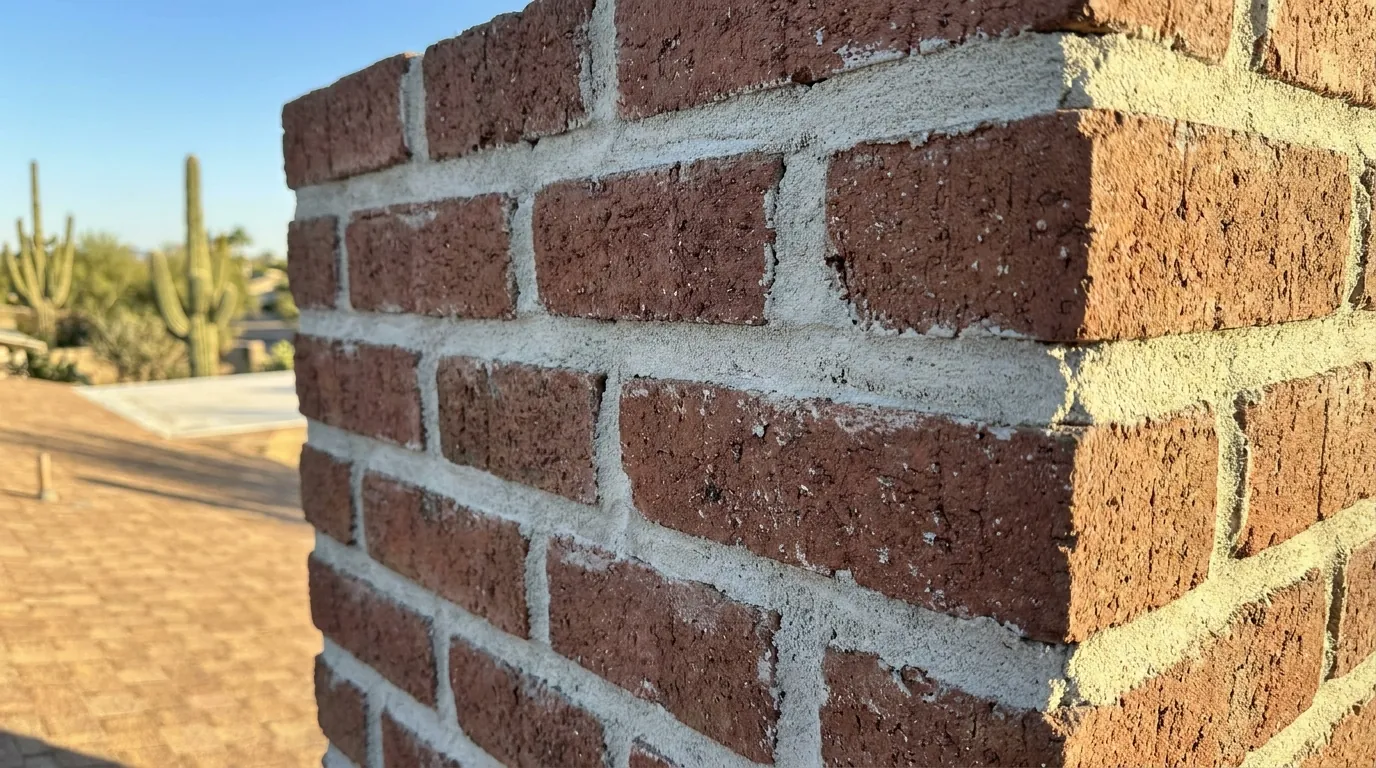
On almost every masonry chimney, the mortar joints give out before the brick does. Mortar is meant to be the sacrificial layer — softer than the brick so it absorbs movement and weathers away instead of cracking the brick face. Over the years, Chandler's heat, dry air, and monsoon soakings erode those joints until they recede, crack, and let water run straight into the wall. Repointing rakes out that failed mortar and packs in fresh, so the joints again shed water and hold the brick together.
The warning signs are easy to read once you know them: joints that have receded so you can see a shadow line or slip a coin into them, sandy grit collecting at the base of the chimney, hairline gaps at the corners, or damp patches showing up inside after a storm. Catching this stage matters, because once water sits behind unpointed brick through enough heat cycles, the brick faces start to spall — and spalled brick means a chimney rebuild above the roofline instead of a much smaller repointing job.
Repointing is also one of the first things flagged during a home sale inspection, so keeping the joints sound protects both the chimney and the property value. Our chimney flashing and leak repair work often pairs with repointing when water has been finding more than one way in.
How repointing is done right
Good repointing is about matching the new mortar to the old and cutting to a clean depth.
-
Rake out the failed joints
We grind or rake each deteriorated joint to a consistent depth — typically about twice the joint width — so the new mortar has enough bite to bond and will not pop out.
-
Match the mortar
The new mix is matched to the brick's hardness and the original mortar. On older soft brick we use a softer, lime-rich mortar; a mix that is too hard will crack the brick face instead of flexing with it.
-
Pack and tool the joints
Fresh mortar is packed in tight and tooled to match the original joint profile, which sheds water and blends the repair into the existing wall.
-
Cure and clean
In Chandler's dry heat mortar can cure too fast and crack, so we control moisture as it sets, then clean mineral haze and excess mortar off the brick faces.
How Chandler conditions change repointing
Mortar wants to cure slowly and evenly. In Chandler's arid heat, a fresh joint can dry out faster than it should, drawing water to the surface and leaving a weak, crumbly joint that fails within a season. That is why timing, shade, and controlling moisture during the cure matter as much as the mix here — good repointing in the desert is partly about managing the sun.
The other local factor is the mineral-heavy water and dust. Hard water and blowing caliche dust can leave a whitish haze on brick, which is why we clean the faces after tooling. If the joints are already so far gone that raking them undermines the brick, repointing may not be enough on its own, and we will talk through whether a partial rebuild or chimney crown and cap replacement belongs in the same visit.
Catch failing joints early
Receding joints and grit at the base of the chimney are the moment to repoint. Get an assessment before the brick starts to spall.
Serving Chandler, Gilbert, Tempe, Mesa and nearby communities.
Frequently asked questions
What is the difference between tuckpointing and repointing?
Repointing means removing failed mortar and packing in fresh mortar to renew the joints. Tuckpointing is a finishing technique that gives joints a crisp, fine line. In everyday use both terms cover renewing the mortar joints on your chimney.
How long does new mortar last?
Well-matched, properly cured mortar can last decades. The key is using a mortar suited to the brick's hardness and controlling the cure so it does not dry too fast in the desert heat.
Can I just seal over the old joints?
Sealing over failed joints traps moisture and hides decay rather than fixing it. Sound repointing removes the failed mortar to depth and replaces it, which is the only lasting way to restore the joint.
Will repointing stop my chimney from leaking?
Open joints are a common water entry point, so repointing often stops leaks. If water is also entering at the crown, cap, or flashing, those need attention too for a complete fix.